Voltage Of Each Battery . Insert the tips into each cell, starting at one end of the battery and work your way to the other. For example, in lead acid batteries, each cell has a voltage of about 2v. Connecting Batteries Serial/Parallel/Serial and Parallel from owlcation.com Because of this internal resistance of battery , there will be some voltage. Other batteries voltages can be calculated with same method. Are all d batteries 1.5 volts?
How To Check Signal To Noise Ratio. How to measure signal to noise ratio. Signal to noise ratio gets measured by subtracting the unwanted waves (noise) from the signal strength.
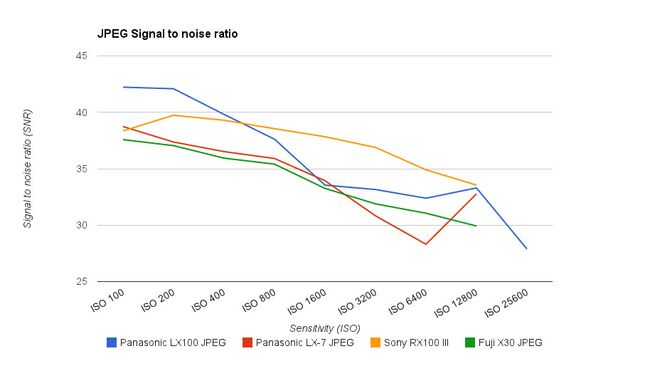
Noise and dynamic range Panasonic LX100 review TechRadar from tipsmake.en.dvrdns.org
Snr = signal to noise ratio. The higher the proportion, the simpler it progresses toward becoming to identify a genuine sign or concentrate helpful data from the crude sign. We now have the noise component, but still need to calculate the “signal” component.
The Procedure To Use The Signal To Noise Ratio Calculator Is As Follows:
If the variance of the signal and noise are known, and the signal is zero: Achieving your desired signal integrity can be difficult at any stage of designing. The thing is you get lte signal strength but there is no way (afaik) you can measure noise strength on your phone.
This Is The Reciprocal Of The Coefficient Of Variation:
You can use either classic or intelligent reporting to report signal/noise. Going to measure mode we can check that the ac rms value of the voltage in channel approximately matches the calculated voltage in/iir filter/rms channel. Snr = signal to noise ratio.
So As To Decide The Quality Of A Sign It Is Important To Ascertain What We Know About The Signal To Noise Ratio (Snr).
S n r = σ s i g n a l 2 σ n o i s e 2. Snr = 20 * log 10 (s/n) where: S/n = 20 log 10 (p s /p n)
Strengths Of Signals Are Measured In Dbm.
To get the signal to noise ratio, it’s the signal minus the noise, which means we have an average signal to noise of 40 in this case: The sample signal to noise ratio (snr) is defined as the ratio of the mean to the standard deviation: We now have the noise component, but still need to calculate the “signal” component.
To Calculate Signal To Noise In Chemstation You Will Need To Define Noise Ranges In Your Method.
Where s is the sample standard deviation and is the sample mean. Signal to noise ratio gets measured by subtracting the unwanted waves (noise) from the signal strength. Which are always in negative as signal gets weaker as it moves away from its source.


Comments
Post a Comment